🌟 Welcome to VBR Products Hub – Your One-Stop Destination for Healthy Living & Lifestyle Essentials! 🌟

Understanding Human Tissues: A Complete, Simple Guide from Toe to Head
The human body is a beautiful creation made up of many tiny building blocks. One of the most important building blocks is tissue. Tissues are groups of similar cells that work together to do a specific job. From the toes that help you walk to the brain that helps you think, tissues support every function of the body. Without tissues, the human body cannot move, breathe, digest, feel, or even stay alive. In this article, we will explore the types of tissues, their functions, their benefits, and how they work together to maintain the whole human body. This simple and clear guide is helpful for students, adults, seniors, and anyone who wants to understand how the human body stays strong, active, and healthy.
HUMAN ANATOMY & BODY SCIENCE
Sampath
11/26/20254 min read
Human Tissues
Understanding Human Tissues: A Simple Guide to Their Types, Functions, and Benefits for the Whole Body
The human body is a remarkable creation made up of billions of tiny cells. These cells do not work alone; they come together to form groups called tissues. Tissues are the basic foundation of all body organs and systems. From the smallest toe that helps you balance to the brain that controls everything you do, tissues keep the body alive, active, and healthy. Understanding tissues helps us appreciate how the body works and how we can take better care of it for lifelong health.
Human tissues are essential because they perform almost every function in the body. They help you move, breathe, think, digest food, feel pain, fight infections, and even repair injuries. Without tissues, there would be no organs, no body systems, and no life. All parts of the body—from skin to heart, muscles to nerves—depend on tissues to work together like a perfect team.
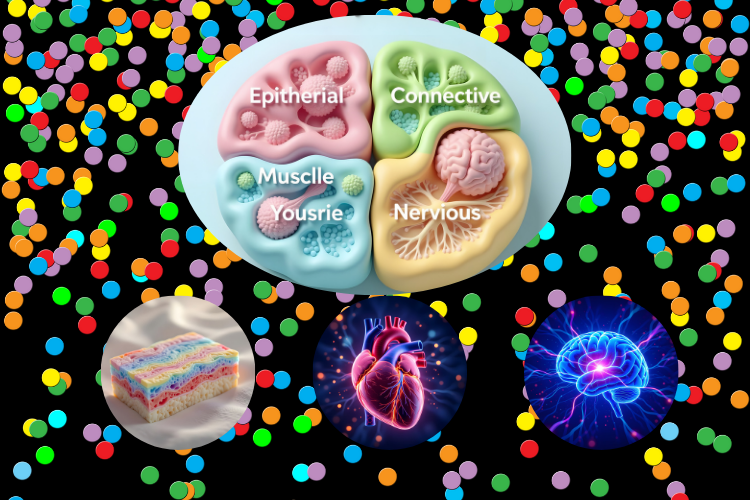
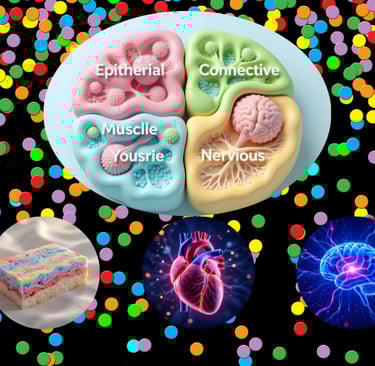
There are four major types of tissues in the human body: epithelial, connective, muscle, and nervous tissues. Each one has a special job and supports the body in a unique way. Together, they form the complete structure of the human body.
Epithelial tissue is the protective covering of the body. It forms the outer layer of the skin, lines the mouth, stomach, lungs, and all internal organs. It acts like a shield, blocking dust, germs, heat, and damage. This tissue also helps in absorbing nutrients, releasing waste, and producing sweat, oils, and hormones. Without epithelial tissue, the body would be exposed to infections, dehydration, and constant injury.
Connective tissue is the most widespread tissue in the body. It binds, supports, and protects other tissues and organs. Bones, blood, fat, ligaments, and cartilage are all forms of connective tissue. Bones give shape and support; blood transports oxygen and nutrients; fat stores energy and protects organs; cartilage gives structure to the nose, ears, and joints. Connective tissue keeps everything in place and ensures stability and strength from head to toe.
Muscle tissue is responsible for all kinds of movement, both voluntary and involuntary. It includes skeletal muscles that help you walk and run, smooth muscles that move food through the digestive system, and cardiac muscle that keeps the heart pumping. Muscle tissue allows your body to move, breathe, circulate blood, control posture, and perform daily activities with energy and strength.
Nervous tissue is the body’s communication system. It makes up the brain, spinal cord, and nerves. This tissue sends electrical signals throughout the body, helping you think, feel sensations, move your hands and legs, react to danger, and store memories. Without nervous tissue, the body would not understand what is happening inside or outside, and basic actions like speaking, seeing, or touching would be impossible.
These four tissues work beautifully together in every part of the body. For example, in the feet, muscle tissue helps movement, connective tissue supports bones, nervous tissue senses pressure and balance, and epithelial tissue protects the skin. In the heart, cardiac muscle pumps blood, connective tissue holds valves in place, and nervous tissue controls rhythm. In the stomach and intestines, smooth muscle moves food, epithelial tissue absorbs nutrients, and connective tissue provides structure. In the head, nervous tissue allows thinking and sensing, epithelial tissue covers the scalp, and connective tissue protects the skull. Every step, breath, heartbeat, or thought is possible because tissues work as a team.
Keeping tissues healthy is extremely important for maintaining a strong body. A balanced diet rich in fruits, vegetables, protein, whole grains, nuts, and healthy fats is essential for tissue growth and repair. Drinking plenty of water keeps tissues hydrated and flexible. Regular exercise strengthens muscles and bones, while adequate sleep allows the body to restore damaged tissues naturally. Avoiding smoking, excessive alcohol, and high stress helps prevent tissue damage, especially in the lungs, nerves, and heart. Proper skin care, hygiene, and sun protection also keep epithelial tissues healthy.
Healthy tissues lead to a healthy life. They promote smooth movement, bright skin, a powerful immune system, strong bones, better digestion, an active brain, and overall wellness. When tissues function well, the whole body functions well. Understanding and caring for these tissues helps us become more conscious of our lifestyle and encourages us to take steps toward long-term health and vitality.
In conclusion, human tissues are the building blocks of the body that perform countless functions every moment. The four major tissues—epithelial, connective, muscle, and nervous—work from toe to head to protect, support, move, and communicate. They make our body the brilliant structure it is. By caring for these tissues through a healthy lifestyle, we protect our organs, improve performance, and enjoy a brighter, more energetic life. Tissues may be small, but their role is truly powerful and life-giving.
✅ 1. Daily Fruit Chart for Full-Day Energy (Simple & Practical)
Morning (Best Time for Detox & Clean Energy)
Apple – Cleans the stomach and boosts brain alertness
Banana – Gives quick energy and supports muscles
Papaya – Improves digestion and keeps tissues soft and healthy
Orange / Sweet Lime – Gives Vitamin C and strengthens immunity
Mid-Morning Snack (Light Energy Boost)
Pomegranate – Improves blood flow and supports connective tissues
Grapes (Green or Black) – Natural sugars for smooth energy
Kiwi – Strong antioxidant for skin and nervous tissues
Lunch Companion (Improves Absorption & Hydration)
Watermelon / Muskmelon – Hydrates body tissues
Pineapple – Helps digest protein and reduces inflammation
Evening Snack (Protects from Tiredness)
Berries (Any type) – Supports brain function and nerve tissues
Guava – Very high in Vitamin C for tissue repair
Night (Light & Gentle)
Small bowl of ripe Papaya or Grapes – Helps digestion and keeps the stomach calm
Avoid acidic fruits at night like oranges or pineapple
Daily Tip:
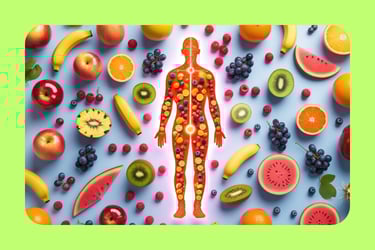
Mix 5–6 colorful fruits every day to support epithelial, connective, muscle, and nervous tissues and maintain all-day energy.
✅ 3. Short Conclusion Paragraph for Your Article
A healthy body depends on healthy tissues, and healthy tissues depend on the food we eat every day. Adding a variety of colorful fruits to our routine gives the body the vitamins, minerals, water, and antioxidants needed to repair cells, improve energy, and support every organ from the feet to the brain. Fruits strengthen skin, bones, muscles, and nerves while boosting immunity and digestion. With a simple fruit-rich diet, daily movement, proper sleep, and good hydration, the body remains active, bright, and energetic ever and ever. A small habit of eating fruits can create a lifelong difference in health and happiness.